If your perfect day starts with coffee on the dock and lines off by sunrise, Lighthouse Point belongs on your shortlist. This small Broward city was designed around boating, so everyday life naturally flows from the backyard to the Intracoastal and the Atlantic. Whether you run a center console, sportfish, or cruiser, you can find a home and a slip that fit your boat and your lifestyle.
In this guide, you’ll learn how Lighthouse Point’s canals work, what “minutes to the inlet” really means, where to find marinas and services, and which dock details to verify before you buy. Let’s dive in.
Why Lighthouse Point works for boaters
Lighthouse Point sits on a dense network of residential canals that feed the Intracoastal Waterway and the nearby Hillsboro Inlet. The city’s layout is the reason private docks are so common and why the community attracts boaters year after year. You get a quiet, residential feel with fast access to open water. Lighthouse Point’s history and geography reflect this canal-first design.
Hillsboro Inlet is the local ocean gateway. From most docks, you reach the Intracoastal quickly, then run a short distance to the inlet and the Atlantic. Many listings and marinas describe locations as “minutes to the inlet,” which is accurate in the sense that runs are short. Your exact timing depends on no-wake zones and your cruising speed.
Ocean access and run times
You will see “no fixed bridges” and “direct ocean access” in many Lighthouse Point listings. Those phrases are important. They tell you that tall cabins, towers, and outriggers are less likely to be an issue on your route to the Intracoastal. Still, always confirm vertical clearance for your specific property and route.
For time-on-water planning, measure the distance from your dock to the inlet along the Intracoastal and divide by your safe cruising speed. Local marinas regularly market their proximity to the inlet because it is a real advantage. For example, Port 32 Lighthouse Point highlights easy access along with full-service amenities.
Tides, depth and navigation
Tidal range around Hillsboro Inlet is modest, but timing still matters for deeper drafts. Check current charts and local tide tables before you commit to a slip or a home. You can reference tide predictions near the Hillsboro Inlet Light to understand typical highs and lows. If you plan to berth a deeper-draft boat, ask for depth readings at mean low water and check for any shoaling near canal entrances.
Bridges and clearance
A key Lighthouse Point advantage is that many canals do not require passing under low fixed bridges to reach the Intracoastal. That sets it apart from pockets of nearby towns where fixed bridge heights can limit tall-masted or towered vessels. Still, you should verify the route for your specific address on local charts and during due diligence.
Marinas and services near you
You have in-town dockage choices and several strong options just minutes away by boat or car. Together, they cover day-to-day fueling, seasonal slips, dry storage, and heavy service needs.
In-town options
- Port 32 Lighthouse Point. Full-service marina with wet slips, fuel, pump-out, guest services and shore power. It is a convenient choice for seasonal boating or as a backup plan during home renovations.
- Lighthouse Point Yacht & Racquet Club. A private yacht club on the Intracoastal with fixed docks and slips often advertised for larger yachts. Membership and permanent dockage are private, though short-term arrangements are sometimes available.
Nearby for storage, haul-out and repairs
- Pompano Beach. A cluster of full-service marinas and dry-stack facilities provide fueling, service departments and, in some cases, indoor or hurricane-rated storage. Review options highlighted among Pompano Beach marinas and service providers.
- Deerfield Beach. Known for large indoor and outdoor storage plus convenient launching. Explore Deerfield Beach marinas and the Pioneer Park ramp when you want fast haul-out or trailer access.
- Fort Lauderdale and Port Everglades. The regional hub for megayacht shipyards, refit, and specialized marine trades. If you run a large yacht, look to Fort Lauderdale’s service corridor for big projects.
Marina amenity checklist
Before you book seasonal or transient dockage, confirm:
- Fuel type and availability, plus pump-out location and hours.
- Shore power capacity: 30, 50 or 100 amp service at your slip.
- Security, wash-down access, laundry and showers.
- On-site mechanics or preferred vendors, and haul-out capability.
- Hurricane plan or dry storage options. Many area facilities, including Port 32, publish amenity details, but always verify specifics with the marina office.
Waterfront homes and docks: what to look for
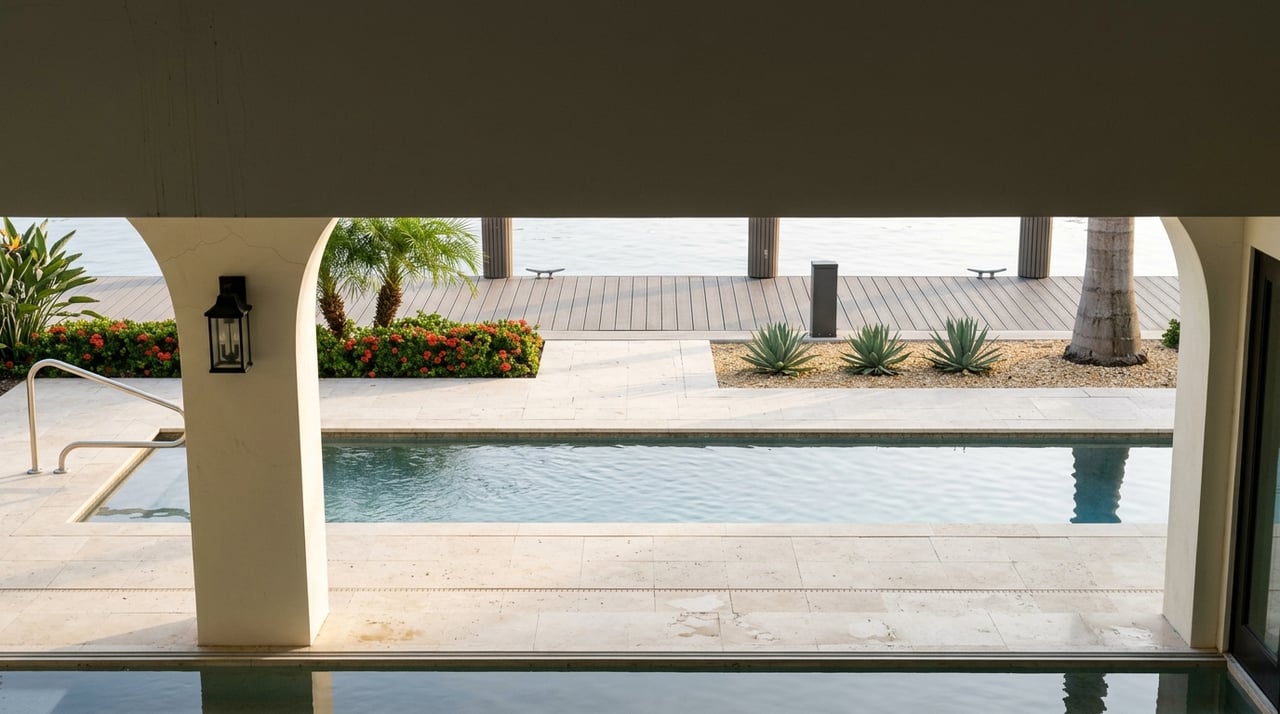
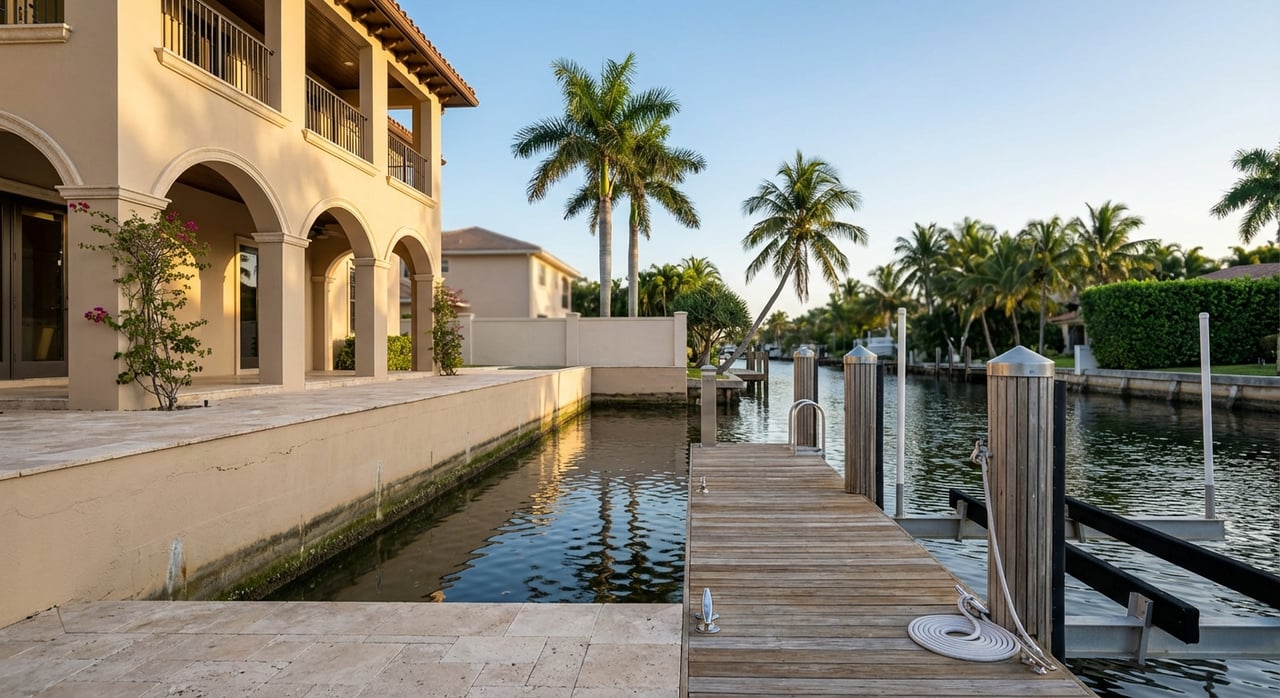
Canal-front homes in Lighthouse Point often include concrete seawalls, fixed or floating docks, and a boat lift. You will see everything from mid-century canal homes to new construction point-lots designed for larger vessels. Dock capacity varies widely, so documentation matters.
Permits and timelines
Dock, lift, seawall and dredging work typically requires local building review, state authorization through the Florida Department of Environmental Protection, and sometimes U.S. Army Corps approval for work in navigable waters. Scope drives timing. Small repairs can move faster, while new docks, lifts or dredging may take months. Start early and plan your sequence. Review permitting pathways via the Florida DEP.
Documents to request before you buy
Ask for these items in writing during your inspection period:
- As-built dock drawings, including slip length and piling type.
- Seawall construction or replacement records, with date and materials.
- Electrical details at the pedestal, including amperage and GFCI notes.
- A recent bathymetric reading at mean low water along the berth.
- Any recorded easements or submerged land leases.
- City or county permit history for the dock, lift and seawall.
Marketing phrases like “no fixed bridges” and “ocean access” help you screen homes. Still, verify each claim with permits, surveys and local charts before you close.
Insurance and storms
Waterfront ownership comes with added responsibilities. Budget for seawall maintenance, lift service and potential flood insurance. The Atlantic hurricane season runs from June 1 through November 30, with a typical peak in late summer. The National Hurricane Center’s seasonal overview is a good planning reference. Have a written hurricane plan for your vessel, whether you store on a lift, secure in a marina, or haul to dry storage.
Safety and marine patrol
Lighthouse Point operates its own public safety programs, including volunteer support and marine patrol resources that help with on-water rules and response. Learn more about local participation and programs through the city’s Volunteer Program page.
How Lighthouse Point compares
- Lighthouse Point. Canal-heavy residential living with many private docks and quick runs to the Hillsboro Inlet. It is ideal if you want a private dock at home and value a quiet city setting with a couple of in-town marina options. For background, see Lighthouse Point’s overview.
- Pompano Beach. A broader range of marinas, dry-stack storage and fuel docks. Some canal systems include fixed bridges or clearance limits, so routes vary by address. Explore regional providers noted among Pompano service facilities.
- Deerfield Beach. A go-to for large indoor storage and convenient public launching. Review Deerfield Beach marina options if big dry-stack capacity is a priority.
- Fort Lauderdale and Port Everglades. The refit and megayacht heart of South Florida, with shipyards and specialized trades concentrated along the New River and Intracoastal. See Fort Lauderdale’s marine service corridor if you run a large yacht or plan a major project.
Quick boater checklist for showings
Use this list when you tour waterfront homes in Lighthouse Point:
- Measure the slip and confirm piling type and spacing for your beam.
- Confirm depth at mean low water at the berth and canal entrance.
- Check for low fixed bridges on the route to the Intracoastal.
- Verify shore power configuration for your vessel.
- Inspect seawall condition and recent improvements or replacement date.
- Ask for all dock, lift and seawall permits and inspections.
- Map the run to Hillsboro Inlet and estimate timing at your cruising speed.
- Identify your hurricane plan: stay on lift, secure in a marina, or haul out.
Next steps
If you are weighing lighthouse views, inlet runs and the right dock for your boat, you do not have to figure it out alone. A focused, waterfront-first search can save you time and reduce risk during inspections and permitting. When you are ready, let a local expert line up properties that truly fit your vessel and your lifestyle.
Turn your dream into an address. Connect with Robert Temelkoski to map your Lighthouse Point options and start your on-the-water search.
FAQs
What makes Lighthouse Point ideal for boaters?
- The city’s canal design, direct access to the Intracoastal, and proximity to Hillsboro Inlet create short, simple runs to the Atlantic, as outlined in Lighthouse Point’s overview.
How close is Lighthouse Point to the ocean?
- Hillsboro Inlet is the local gateway. Many docks are a short Intracoastal run from the inlet, often marketed as “minutes,” with timing based on your route and no-wake zones. See Port 32’s location context for a reference point.
Do fixed bridges limit access from Lighthouse Point canals?
- Many Lighthouse Point routes avoid low fixed bridges, which benefits towered and tall-cabin vessels, but always confirm your exact path on charts and by water before you buy.
What permits are needed for docks or seawalls?
- Expect local building review plus state authorization through the Florida DEP, and often U.S. Army Corps approval for work in navigable waters. See the Florida DEP A–Z index for program pathways.
When is hurricane season and how should I prepare?
- The Atlantic season runs June 1 to November 30, with peak activity in late summer. Plan ahead for haul-out, marina tie-ups, or lift procedures. Use the National Hurricane Center’s seasonal guide to inform your plan.